The Inn at the Heart of it.
Over two hundred years in the same village. A different name since 1834.
The same purpose throughout.
They used to call it ‘The Board’…
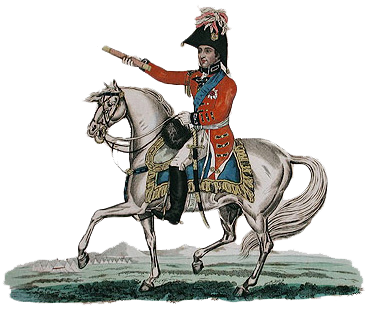
A working inn on this stretch of Northumberland, offering board and lodgings to the men who worked the land and the trades around it. In 1834, it was renamed. Wellington had defeated Napoleon at Waterloo nearly two decades before, and the Duke's name was still the name you gave to things you wanted to endure.
William Fewster and his family ran this inn through much of the nineteenth century. The Symms family (known across the area for their agricultural engineering) became part of the story in time, as did every family who made their living in the valley and found their way here at the end of a long week.
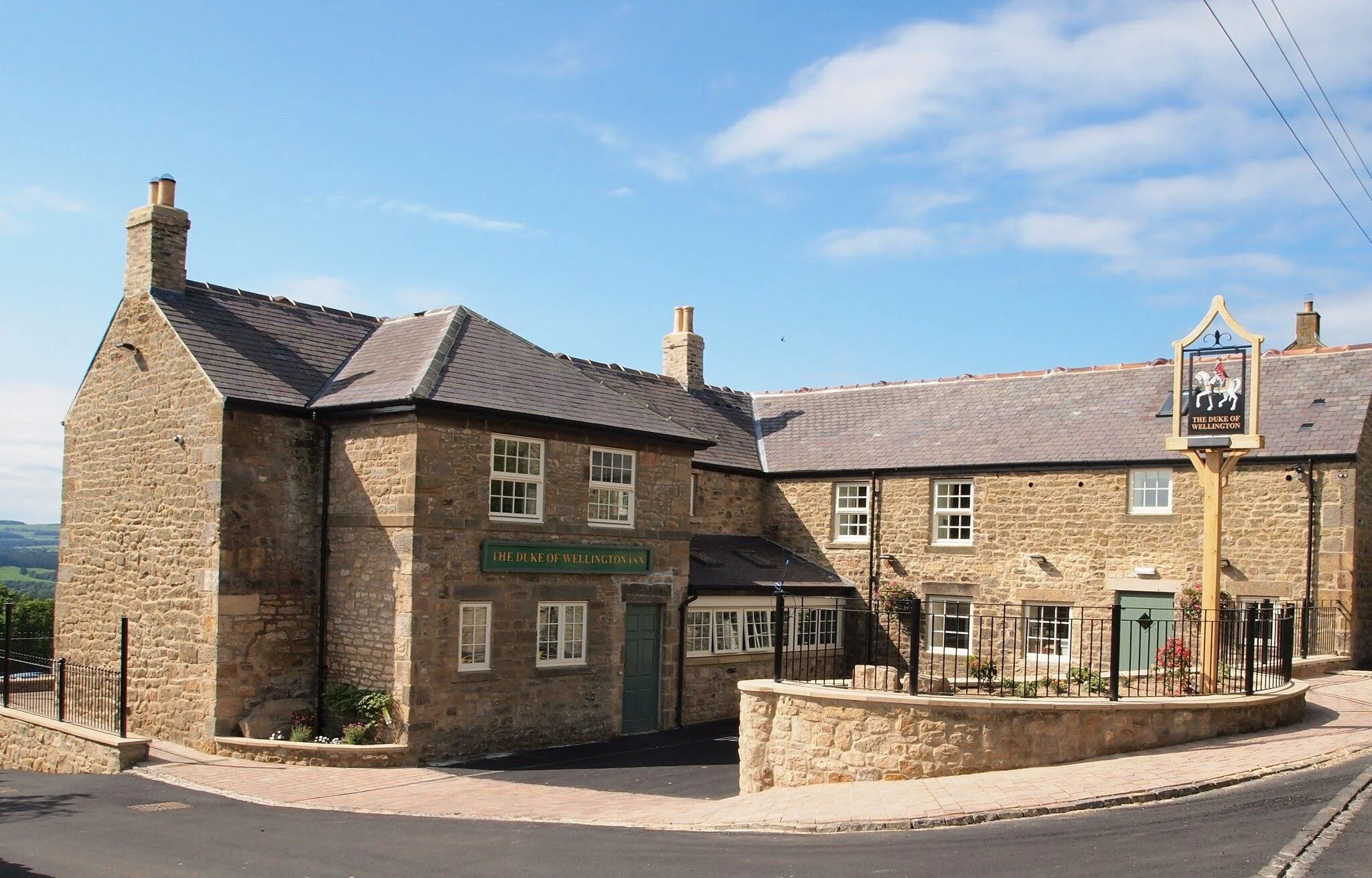
Extensively refurbished in 2010, and recognised since with awards from the AA and Visit England, The Duke remains what it has always been. The place the village comes back to. The kitchen that follows the seasons. The bar where you know the person next to you, or you will by the time you leave.
“A village is not just a place on a map.
It is a pattern of people; neighbours, regulars, faces you know across the bar.
It is the quiz night on a Monday. The table by the window on a Friday.
We have been here for over two hundred years.
We have fed people well, kept the fire lit, and kept the door open.
That is what we intend to keep doing.”
The Duke’s Timeline:
-
The Board opens in Newton, offering lodgings and sustenance to local workers and travellers through the Tyne Valley.
-
Renamed The Duke of Wellington Inn, honouring Wellington's victory at Waterloo. William Fewster is the earliest known innkeeper; his family run the inn through much of the nineteenth century.
-
The Symms family, renowned locally for their agricultural engineering business, join the story weaving the inn further into the fabric of the village.
-
Extensively refurbished. The kitchen earns its AA Rosette. Visit England awards five-star gold. The Duke continues, as it always has, to be the heart of Newton.